Sneaker Price Map: 8 Shoes Tracked Across Department Stores
The same Nike, Adidas, and Puma sneakers sit at wildly different prices depending on which store you check. We tracked eight popular models across six retailers to map the gaps.
Published August 28, 2026·8 products·6 stores comparedAuto-curated
Sneaker shopping at department stores has a counterintuitive quality: the exact same shoe — same brand, same colorway, same materials — routinely sits at three or four retailers simultaneously, each one pricing it differently. The gaps are not trivial. On several models we tracked this month, the spread between the cheapest and priciest listing was wide enough to buy a second, cheaper pair with the savings. If you are buying sneakers this fall, which store you check first is genuinely a financial decision.
This matters more than usual heading into the new school year. The NRF projects record back-to-school spending on shoes this year, with families allocating a meaningful share of their budgets to footwear — and nearly two-thirds of shoppers expecting to see higher prices than last year. Meanwhile, classic court shoes and retro runners are dropping below their retail values across the sneaker market, which means off-price channels like Nordstrom Rack are flush with models that full-line stores still carry near the original price. The result is exactly the kind of cross-store pricing gap that makes a five-minute search worth doing. We tracked eight sneakers live across our database to map where those gaps land right now.
COURT SHOES
The Widest Gaps Live Here
Nordstrom Rack#1
#1
Nike
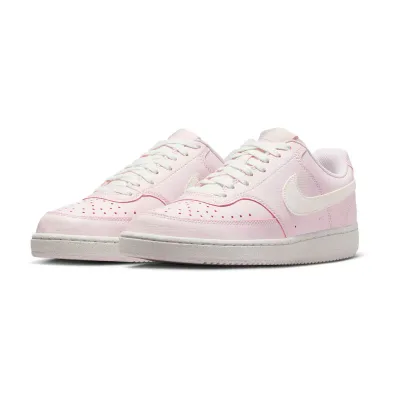
Nike Court Vision Low Womens Sneakers
A clean low-top court shoe tracked at four stores with the broadest retailer coverage in this roundup, where the gap between cheapest and priciest is substantial.
The Court Vision Low is Nike’s answer to the retro tennis shoe trend that has dominated street style for the past two years — a clean, low-profile upper with a flat rubber outsole and a minimal colorway. What makes it instructive here is the breadth of availability: four separate retailers stock the same shoe, and the cheapest listing comes from the off-price channel. This is not an overstock anomaly — the price history in our tracker shows Nordstrom Rack has held its listing steady for weeks while the full-line stores have been cycling between sale and full price. If you want court-style sneakers for everyday wear, the lesson is simple: check the off-price channel before you check anyone else.
Nordstrom Rack#2
#2
Cole Haan
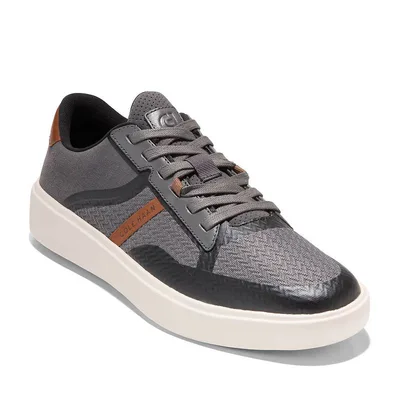
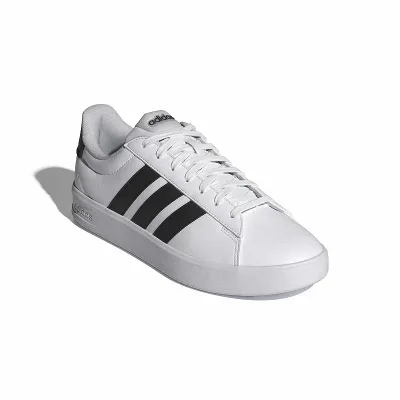
Cole Haan Grand Crosscourt Winner Men's Sneakers
A leather-accented court sneaker where the gap between off-price and full-line channels is the largest in absolute terms across this entire roundup.
The Grand Crosscourt Winner is the only sneaker in this roundup that bridges athletic and dress-casual — the kind of shoe that works with chinos or jeans without looking like you wandered in from the gym. Cole Haan’s strategy of distributing through both department stores and off-price channels creates an unusually uneven pricing landscape. Kohl’s carries a version at a moderate markdown, Nordstrom Rack sources from the off-price pipeline at a deeper cut, and Macy’s prices a variant from a higher original retail — all for what is functionally the same shoe family. The moc-toe silhouette and foam footbed make it an easy office shoe for anyone who finds conventional dress shoes uncomfortable.
THE PLATFORM PLAY
Where JCPenney Wins
JCPenney#3
#3
Puma
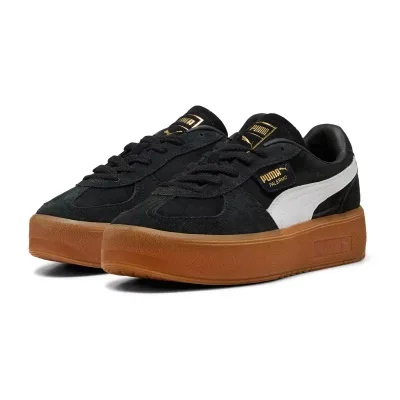
PUMA Palermo Elevata Womens Sneakers
An ’80s terrace classic rebuilt with a platform sole and suede upper — JCPenney undercuts both Nordstrom Rack and Bloomingdale’s by a wide margin on this model.
The Palermo Elevata is having a moment — Puma’s ’80s terrace shoe rebuilt with a chunky platform sole has become a staple of the retro-but-elevated aesthetic that shows no signs of slowing down. What makes it unusual in this roundup is that JCPenney, not an off-price channel, has the lowest price. That happens when a mid-tier retailer decides to use a trending brand as a traffic driver and prices aggressively to compete with the Nordstrom Racks of the world. Bloomingdale’s carries the identical shoe at the full retail price, treating it as a fashion item rather than a deal. The suede-and-leather construction and memory foam insole work at either price point — but only one of them requires you to think twice.
THE EVERYDAY ROTATION
Three More Worth Checking
Reliable daily drivers with cross-store spreads
Nordstrom Rack
Nike
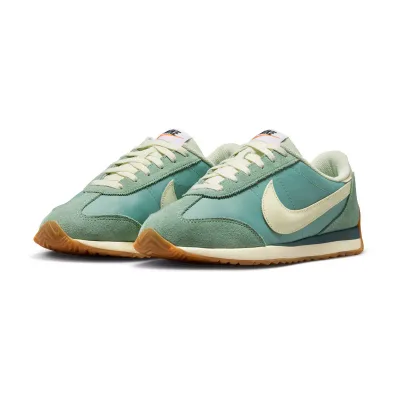
Nike Pacific Leather Womens Sneakers
Retro-inspired leather-and-suede sneaker with a ’70s herringbone gum sole, tracked at four stores with a wide price range.
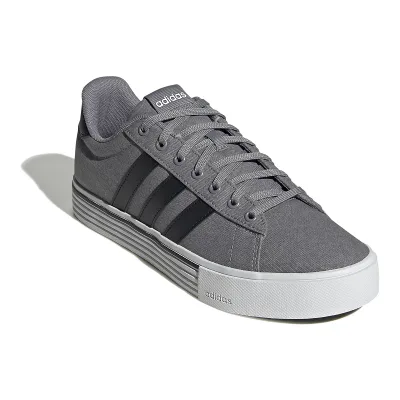
These three represent the everyday segment of the roundup — shoes that are not fashion-forward but reliably good. The Nike Pacific draws on ’70s running aesthetics with a leather-and-suede upper and herringbone gum sole, and it shows the same four-store pattern as the Court Vision: Nordstrom Rack cheapest, Bloomingdale’s priciest, Kohl’s and JCPenney in between. The two Adidas models tell slightly different stories. The Daily 4.0 has a wide three-store spread with Nordstrom Rack pulling far ahead, while the Grand Court 3.0 shows a rare case where Kohl’s actually undercuts Nordstrom Rack — which inverts the pattern most shoppers expect and is worth knowing if you default to the off-price channel without checking elsewhere.
ALSO ON THE RADAR
Two More to Watch
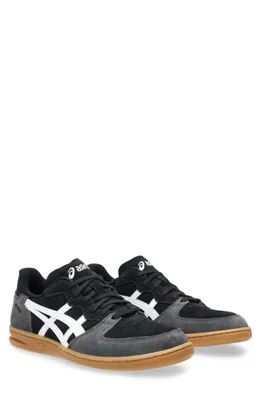
ASICS
Gender Inclusive Skyhand OG Sneaker
A retro handball shoe reborn with FlyteFoam cushioning, showing how the Nordstrom family prices the same shoe differently within its own ecosystem.
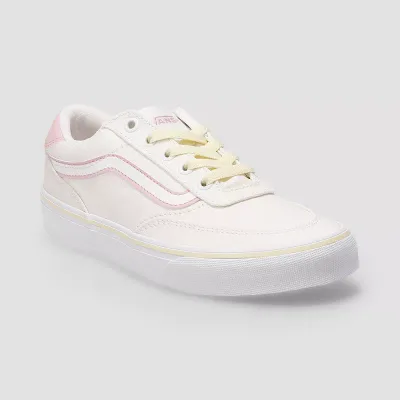
The ASICS Skyhand OG is worth mentioning for a specific reason: it illustrates how the same corporate family — Nordstrom and Nordstrom Rack — prices the same shoe differently within its own ecosystem. The Skyhand is an ’80s handball shoe rebuilt for the street with ASICS’ FlyteFoam cushioning and a gum-rubber cupsole, and it carries genuine retro credibility. The gap between the full-line and off-price listings reflects the fundamental difference in how those channels source and price inventory, even when the parent company is the same. The Vans Brooklyn, meanwhile, shows Kohl’s beating Nordstrom Rack on a lifestyle sneaker — a pattern worth checking before assuming the off-price channel always wins.
TIMING GUIDE
When Sneaker Prices Actually Move
Sneaker markdown calendars follow a different rhythm than apparel. Most department stores run their deepest shoe sales during three windows: back-to-school in late July through mid-August, Black Friday and Cyber Monday in late November, and post-holiday clearance in January. We are past the peak of the first window now, but that does not mean the deals are gone — it means the selection has shifted.
What tends to happen in September and October is that stores keep their sale prices on current inventory but stop replenishing sizes. The sneakers that are marked down now will stay marked down, but popular sizes will thin out. If you see your size in the models above, the current window is likely better than waiting for Black Friday, because Black Friday shoe deals typically feature different inventory — often special holiday colorways or packs rather than restocks of whatever was on sale in August. The exception is higher-end models like the Cole Haan, which tend to see their deepest markdowns during department store friends-and-family events in October and November. If your size is common and you are not in a rush, waiting for those events on premium brands specifically can pay off.
The consistent pattern across these eight sneakers is that checking a second store — and especially checking an off-price channel — surfaces a meaningful price difference on what is literally the same product. Nordstrom Rack wins on five of the eight models here, Kohl’s wins on two, and JCPenney takes one. The price cards on each product above update with live data, so if any of these spreads have shifted since this article went up, you will see the current numbers, not a frozen snapshot.
 Nordstrom Rack